
Systems Designed for Soil That Won't Pass Percolation
Septic installation in Sterling for newly built rural lots with poor native soil
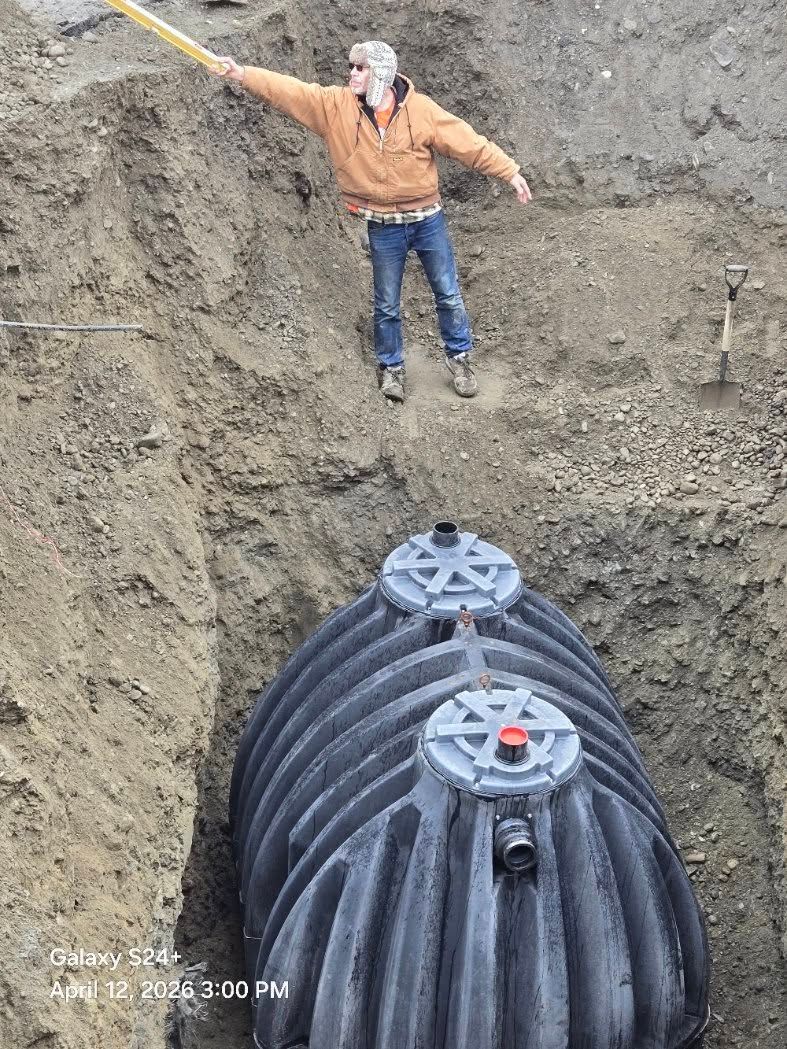
Newly built rural lots on the Kenai Peninsula often have poor native soil, so the drain field is frequently built on imported fill rather than the ground as found. The site is tested for percolation and soil conditions before a drain field location is chosen, and where the native soil is poor, imported fill is brought in and the drain field is built on it. J & B Construction & Septic installs new septic systems in Sterling, with the owner's small crew testing the site, choosing the drain field location, and handling the excavation and site work in the same job.
The tank, field, and grading are installed by the same team, so the system is coordinated with the lot's drainage and access requirements from the start. Because the crew handles both the percolation testing and the excavation, the drain field location is chosen based on test results rather than assumptions, and the fill material is selected to support the percolation rate the system requires.
Schedule a site visit to test soil conditions and review drain field placement before excavation begins.
Why Percolation Testing Happens Before Field Layout
Percolation testing measures how quickly water moves through the soil, which determines whether the native ground can absorb effluent at the rate the system will produce it. On lots where the native soil fails the test, imported fill with a known percolation rate is brought in, and the drain field is built on that material instead. That approach keeps the system compliant with local standards and prevents field saturation or surface pooling after the system is in use.
Once the installation is complete, the system drains normally, the tank receives effluent from the house, and the field distributes it into the soil without surface evidence. You'll notice that drains work at normal speed, there's no wet ground above the field, and the lot remains usable around the system area.
The installation includes the tank, the distribution box, the drain field lines, and the grading required to direct surface water away from the field. J & B Construction & Septic is licensed as a certified septic system installer and a contractor, with the owner self-employed in the trade since 2000.
What Property Owners Ask About the Work
Septic installations on rural lots in Soldotna and Nikiski often involve soil that does not meet percolation standards, so understanding how the system is sited and what materials are used helps property owners plan the installation around the rest of their site development.
What does the percolation test involve?
A hole is dug in the proposed field location, filled with water, and timed to see how long it takes to drain, which determines whether the native soil can handle the effluent load the system will produce.
How is the drain field built if the soil fails the test?
Imported fill with a known percolation rate is brought in, graded to the required depth, and compacted to create a stable base, then the drain field lines are installed on top of that prepared material.
What gets installed along with the tank and field?
The distribution box, which splits flow between field lines, and the inlet and outlet baffles, which control flow into and out of the tank, are both included in the installation.
How is the field location chosen when there are multiple options on the lot?
The location is based on percolation test results, distance from the house, setback requirements from property lines and wells, and access for future maintenance or replacement.
What should you avoid placing over the drain field after installation?
Heavy structures, vehicles, or deep plantings should not be placed over the field, because compaction or root intrusion can damage the lines and reduce the soil's ability to absorb effluent.
J & B Construction & Septic also installs septic systems in Kenai, Soldotna, Kasilof, and Nikiski. The crew works across the peninsula on lots where soil testing and proper field placement are required before any excavation begins.