
Systems That Work Without Surprise Backups
Septic repair in Sterling for slow drains, wet ground, and failing drain fields
Most rural residential lots across the Kenai Peninsula rely on a septic tank and drain field rather than municipal sewer, which means a failing field often shows up as slow drains or soft, wet ground before any backup occurs. J & B Construction & Septic repairs septic systems in Sterling, working directly on the tank, baffles, and drain field to restore normal function. The crew is owner-run and works on the systems themselves rather than handing jobs to subcontractors, so the person scoping the repair is the same one completing it.
A repair starts with finding where the system is failing, usually by checking the tank, the inlet and outlet baffles, and the drain field. Repairs are scoped before work begins, and if the tank needs pumping first, the customer is directed to a separate pumping provider so the repair crew works on a clean, accessible system. That sequencing keeps the diagnosis accurate and the repair focused on the actual failure point rather than symptoms masked by a full tank.
Schedule a system evaluation to identify the specific failure before it progresses.
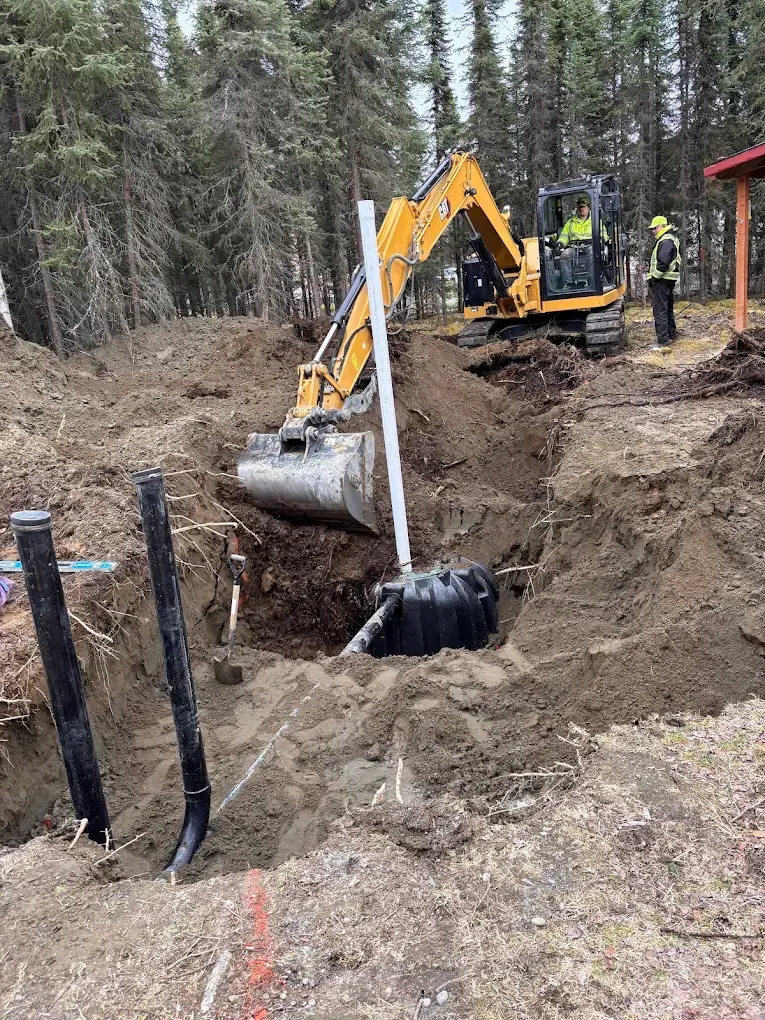
What Proper Septic Repair Requires
The repair process involves isolating whether the problem is in the tank itself, the baffles that control flow, or the drain field that distributes effluent into the soil. Each component is checked methodically, because a slow drain can result from a blocked baffle just as easily as a saturated field. Once the failure is located, the repair is scoped to address that specific issue without replacing components that are still functional.
After the repair, drains return to normal speed, wet areas above the field dry out, and the system handles daily use without surface pooling or odor. You'll notice that sinks and toilets drain at the rate they did when the system was new, and the ground above the field stays firm and dry even after heavy household use.
J & B Construction & Septic is a licensed general contractor and certified septic system installer, with the owner self-employed in the trade since 2000. Pumping of septic tanks is not part of the service and is referred to a separate local provider, so the repair work stays focused on restoring system function.
What Property Owners Ask About the Work
Repairs on rural Kenai Peninsula properties often involve systems installed decades ago, before current drain field standards were widely adopted, so understanding what each component does and where failure typically occurs helps property owners recognize problems early.
What gets checked first when drains slow down?
The tank is inspected for level and capacity, then the inlet and outlet baffles are checked for blockage or deterioration, followed by the drain field if those components are clear.
How does a failing drain field show up on the surface?
Soft, wet ground above the field, standing water after use, or patches of unusually green grass indicate that effluent is not being absorbed and is instead pooling near the surface.
Why does the tank need to be pumped before some repairs?
A full tank hides baffle damage and makes it difficult to see whether the inlet or outlet is blocked, so pumping it first allows the crew to work on a clean system and diagnose accurately.
What happens if only part of the system has failed?
Repairs are scoped to replace or fix the failing component—whether that is a baffle, a section of field line, or a distribution box—without tearing out parts that are still working.
How long does a repaired system typically function after the work is complete?
That depends on what was repaired and how the system is used, but addressing the specific failure and restoring proper flow extends the working life of the overall system and delays full replacement.
J & B Construction & Septic also repairs septic systems in Kenai, Soldotna, Kasilof, and Nikiski. The owner-run crew works across the peninsula on systems that serve properties outside municipal sewer service, where early diagnosis prevents more costly replacements later.