
Utility and Septic Lines Set to Grade
Trenching in Sterling for water, power and septic lines across rural properties
Trenching starts by marking the route for the utility or septic line and confirming the depth and bedding the installation requires. J & B Construction & Septic digs trenches for water, power and septic lines in Sterling and across the peninsula, with the owner running the excavator on every job. The crew cuts the trench to the grade the line needs, sets the pipe or conduit, and backfills in compacted lifts to prevent settling and maintain grade over the long term.
Many rural properties on the Kenai Peninsula run service lines long distances from the road to the house, shop or septic system, making the trench the longest and most visible part of the installation. Where the native material is unsuitable—too rocky, too wet or too unstable—the crew excavates it and brings in bedding material before the line is placed. The trench is backfilled once the line is set to grade and the installation is confirmed.
Call (907) 953-1555 to schedule trenching for a water, power or septic line on your property.
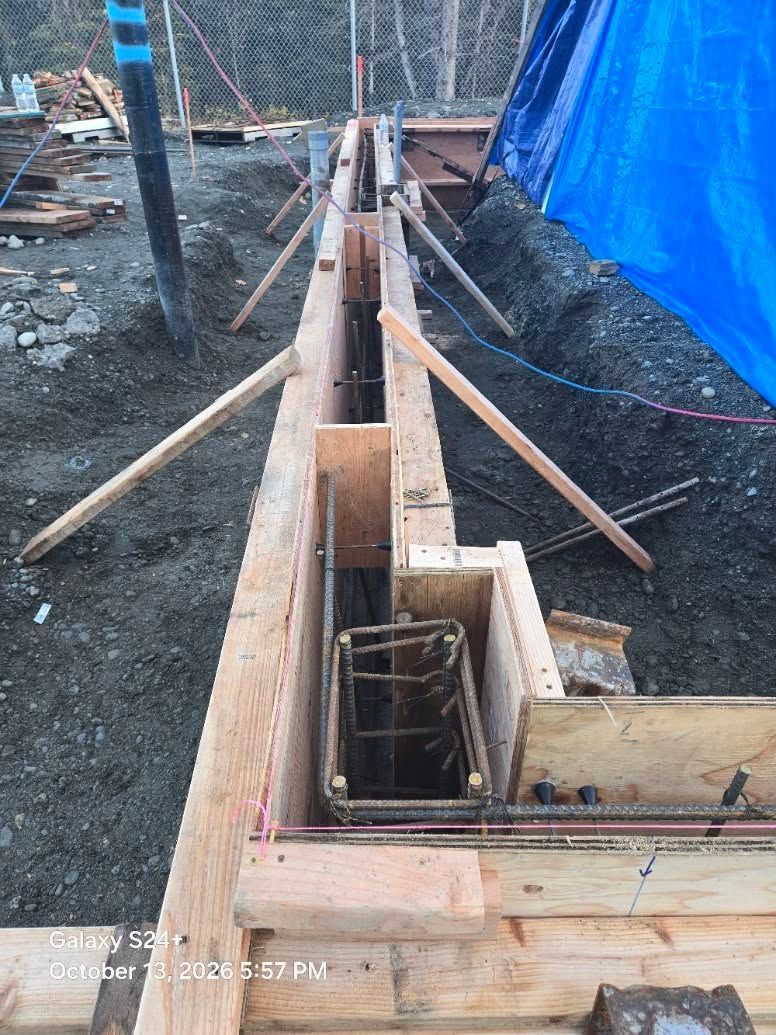
How Trenching Protects the Line
The trench is cut to the depth required by the line type and local code, and the width is sized to allow proper bedding and backfill around the pipe or conduit. Where bedrock, large stones or saturated soil is encountered, the crew adjusts the route or removes unsuitable material and replaces it with clean fill before the line goes down. Bedding material is placed under and around the line to prevent shifting, support the pipe and maintain the required slope for drainage or gravity flow.
Once the line is in place and set to grade, backfill is placed in lifts and compacted to prevent settling that could break the line or cause surface depressions. The trench remains stable over time, the line stays at the original grade, and surface water does not pool along the route.
Trenching for septic lines differs from utility trenching in that septic lines must maintain a consistent downward slope to the drain field or tank, and any deviation from that grade will cause the system to fail. Properties in Kenai and Nikiski with long driveways or wooded setbacks often require trenches that run several hundred feet from the building to the system or road connection.
Questions Before Trenching Begins
Rural properties often require long trenches across uneven or heavily wooded ground, and these questions address how the work is sequenced and what the property owner should confirm before digging starts.
What determines trench depth and width?
Depth is set by the type of line being installed and local code requirements, and width is sized to allow proper bedding and backfill around the pipe or conduit without crowding.
How is the route marked before digging?
The crew walks the property with the owner to confirm the path from the building to the septic system, well or road connection, marking the route and identifying obstacles or grade changes that will affect the trench.
What happens if unsuitable material is encountered?
When bedrock, large stones or saturated soil is found in the trench, the crew removes it and replaces it with clean bedding material before the line is placed.
Why is backfill placed in lifts?
Backfilling in layers and compacting each lift prevents settling that could break the line, cause surface depressions or shift the pipe out of grade over time.
What does the site look like after trenching is finished?
The trench is backfilled and compacted, the line is set to the required grade, and the surface is restored so equipment and foot traffic can cross without disturbing the installation.
J & B Construction & Septic has been digging utility and septic trenches across the Kenai Peninsula since 2000, with the owner operating the excavator on every project. J & B Construction & Septic also provides trenching in Kenai, Soldotna, Kasilof and Nikiski. Call (907) 953-1555 to confirm the route, depth and bedding requirements for your trench.